Honduras, Immigration, and Technology
Zones of Employment and Economic Development
March 03, 2026
Honduras, Immigration, and Technology
Zones of Employment and Economic Development
Last year, while traveling to Honduras, I briefly made a ferry stop on the island of Roatan before continuing to my final destination to Guanaja for my dad's 90th birthday. During that stop, I was able to briefly visit a beautiful resort called Palmetto Bay.
This idyllic resort is a cocooned paradise, which words can barely describe. (Here's 1,000 words' worth...)
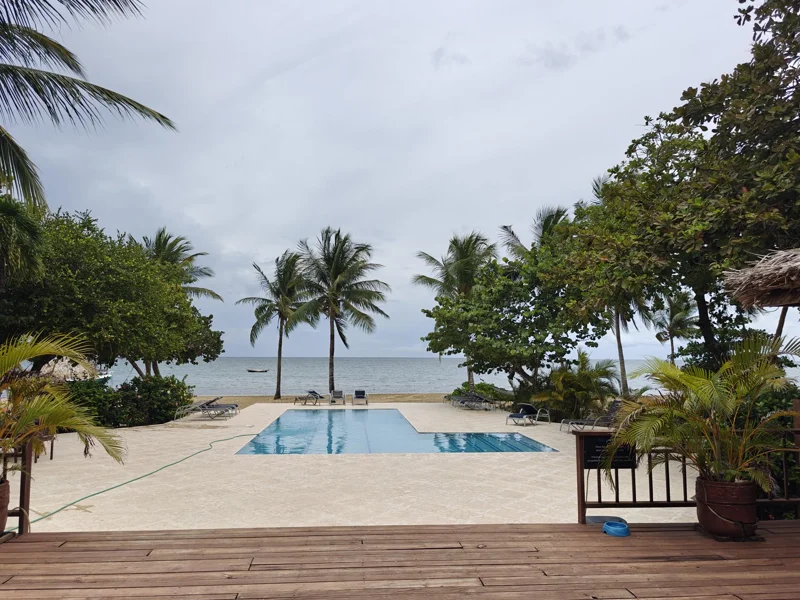
What I didn't know at that time is that I was less than a mile away from a zone called Próspera ZEDE, a so called Zone for Employment and Economic Development.
This zone has its own political system. It determines its own judicial and economic laws, eschewing Honduran national laws.
History
But before I get into why I decided to blog about it today, here's a bit of recent Honduran history.
Coup
It is an understatement to say that Honduras has had a tumultuous political history. Corruption runs deep, regardless of ruling political party.
In 2009, President Manuel Zelaya, attempted to rewrite the Honduran constitution, which would have allowed him to stay in power. Even members of his own Libre party (left-wing, anti-free market capitalists) opposed his efforts.
What followed was a constitutional crisis in Honduras, and a coup d'état after Zelaya refused to comply with a Honduran Supreme Court ruling forbidding his efforts.
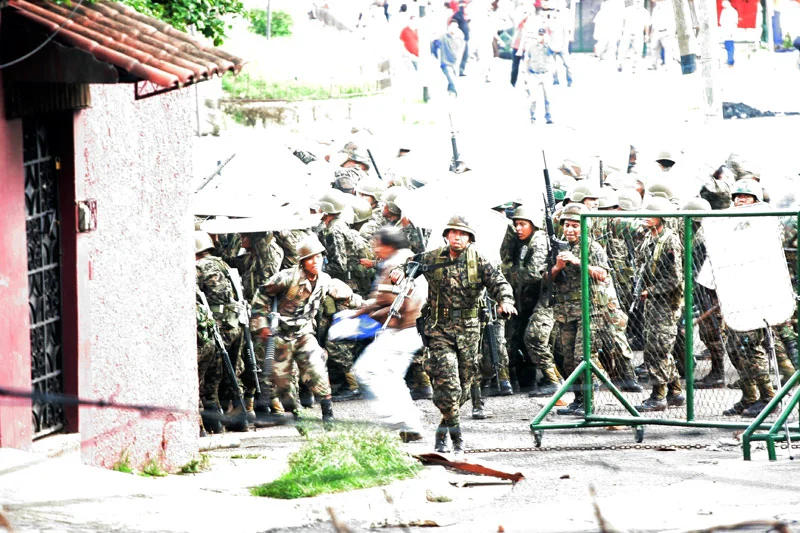 Roberto Breve, CC BY-SA 2.0
The military overthrow was problematic in its own right and was condemned internationally, leaving the country in crisis.
The political mood shifted drastically to the right, which led to the election of right-wing candidate President Lobo Sosa, winning that general election with 56% of the vote against 38% of his rival.
Lobo
Lobo proceeded to dismantle many of Zelaya's previous social reforms, including minimum wage guarantees and laws making it difficult for workers to unionize, as well as limiting access to social rights.
In order to give you a sense of what happened around Lobo's orbit, I thought to highlight a few other tangential events.
In 2015, Lobo's son Fabio was arrested by the DEA (Drug Enforcement Administration) and sentenced to 24 years in prison for conspiring to import cocaine into the United States.
His wife was found guilty of misappropriation of funds and eight counts of fraud (and also acquitted for separate charges of money laundering and embezzlement). She was found to have spent over half a million dollars that would have gone to low-income children. She was subsequently jailed.
In addition, Lobo was found to have created tax havens for himself, his son, and his wife during his presidency, which were said to be funded by drug cartels.
Lobo was succeeded as president in 2014 by Juan Orlando Hernández Alvarado, or as he was sometimes referred, JOH.
JOH
If you follow the news out of the United States, you may be familiar with that name.
He was recently pardoned by Donald Trump from a 45-year sentence on crimes that included major drug trafficking and money laundering.
In 2014, Hernández narrowly beat his rival to succeed Lobo, and his power over the government gave him impunity. He maintained power during the next election cycle through a controversial Honduran Supreme Court ruling that allowed him to run for re-election.
As such, in 2017, he was re-elected in spite of claims of fraud by the opposition, as well as from international observers. Some 30 demonstrators were killed and more than 800 arrested and sent to military prisons, where they were beaten and tortured.
Part of the fraud committed during the campaign included fake Facebook supporters in order to bolster his image.
Over one six-week period from June to July 2018, Hernández’s Facebook posts received likes from 59,100 users, more than 78% of which were not real people.
His presidency was plagued with claims of corruption and abuses of human rights.
ZEDE
Which brings me back to ZEDE, the so-called Honduran Zones for Employment and Economic Development
During Lobo's presidency, one of his aims was to dismantle many of Zelaya's social programs and invite/attract investment from outside sources.
He introduced a law allowing for these zones to be built, based on an idea of "charter cities" developed by economist Paul Romer, who later became Chief Economist of World Bank.
ZEDE would seek outside funding to increase economic development—but this would be done by ceding control over large portions of land to outside investors.
Without national oversight over these zones, the likelihood of corruption is extremely high.
[A]ccording to the law, the ZEDEs “must establish their own internal security agencies [...] including their own police, as well as agencies tasked with criminal investigation, intelligence, prosecution, and developing a penitentiary system.”
Nobody in Honduras Wants "Model Cities — Except the President, August 2021
This means, in practice, that ZEDEs cannot be held accountable for any exploitation or abuses within these zones.
Keep in mind, this concept was wildly unpopular in Honduras, but the government pushed forward with promises of increased investment and progress for surrounding Honduran communities.
By the time Hernández came to power, he solidified the law. It was done through a combination of purging members of the Honduran Congress and the majority of judges who opposed it.
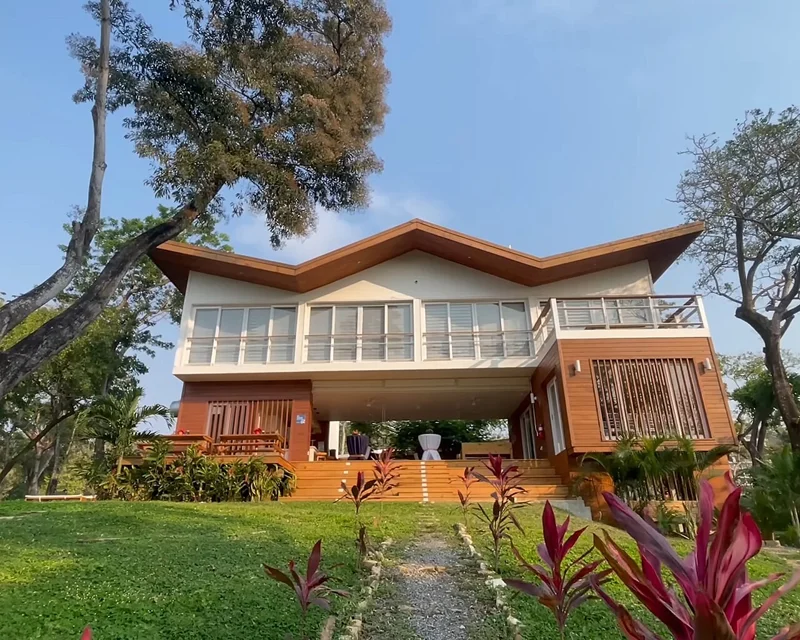 By ReasonTV - YouTube: https://www.youtube.com/watch?v=TwiE1dxGYNY – View/save archived versions on archive.org and archive.today, CC BY 3.0, Link
During that time, Próspera ZEDE in Roatan (among others) was set up in a previously neglected area.
Per the Latin American Working Group:
These communities have historically been neglected and affected by extractive projects. ZEDE Próspera, located in Roatán, is right at the boundaries of a large Black Caribbean Honduran community in Crawfish Rock. The people of Crawfish Rock have protested against the investors’ plans, arguing that people were pressured to sell their land and were not informed of the implications of the ZEDEs.
Castro
Iris Xiomara Castro was Honduras' first female president—serving as president from 2022 to 2026.
She is the wife of ousted former-President Zelaya.
This should illustrate the wild fluctuation of Honduras' politics. She narrowly beat right-wing candidate Nasry Asfura back in 2021, the incumbent of the National Party.
After taking power in 2022, she signed a measure to repeal the ZEDE legislation. However, these zones had been built within a framework that included a 50 year sunset clause.
This escalated quickly, with US-based libertarians and crypto-funded investors ready to strike. They threatened to sue Honduras for nearly $11 billion dollars, which is more than a third of the country's GDP, and could bankrupt the entire nation.
As far as I know, these lawsuits are still in motion.
Current Day
The most recent elections in Honduras took place a few months ago. They were hotly contested and the winning candidate proclaimed victory with a razor-thin margin.
That candidate?
Nasry Asfura, the same one opposing Castro during the last cycle. He was again the right-wing National party's candidate, pushing its free-market agenda and continuing the legacy of Lobo and Hernández.
"The only real friend of Freedom in Honduras is Tito Asfura," wrote Trump during Asfura's campaign.
Trump's pardon of Hernández and endorsement of Asfura came at the height of election season, two days before ballots dropped.
He also threatened to cut off USAID to Honduras if Asfura didn't win.
That tag-team play seemed rather bizarre, even if the only motivation seemed to be the endorsement of another far-right candidate—you know, because misery loves company (as does corruption, apparently.)
What Is This Post Doing Here?
Aside from my identifying as a person of Honduran descent, what does this very specific history lesson have to do with anything thematic to this website?

Well, thank you, Question posing as Rhetorical, I'll use this as an opportunity to segue into something more technologically-relevant.
The Trump pardon of former President Hernández left many scratching their heads, particularly in face of the blatant hypocrisy of pardoning a guilty drug trafficker after murdering fishermen alleged to be... hold on, let me check my notes... oh, yeah... drug trafficking.
As it turns out, this is really a tech story.
Big Fucking Tech
Mother Jones has a theory of why Trump decided to meddle in the elections of one of the poorest countries in the world, in an article titled, "Why Did Trump Pardon the Former Honduran President? Follow the Tech Bros."
It links back to Roger Stone (another one of Trump's convicted-then-pardoned felons) and some of the advice he and conservative figure Shane Trejo passed on to Trump.
In helping to unseat Castro, Stone and Trejo wrote, Trump could both “crush socialism and save a freedom city in Honduras.” The “freedom city” in question, they explained, was Próspera, a special economic zone founded in Honduras by a cadre of American tech titans including Peter Thiel and Marc Andreessen—both friends and fans of Trump family
Ah yes, the good old boys.
Thiel and Andreessen, names that should be a little more familiar than Honduran narco-presidents.
(I've also seen Sam Altman referenced as an investor, though admittedly, the data is fairly thin.)
Próspera is a supposed "network state", which is a sort of fever-dream utopia concocted by the likes of Thiel and Andreesen. These are experimental social constructs meant to embody wild, transhumanist visions, popularized by Balaji Srinivasan (also an investor) in a book of the same name.
Srinivasan writes:
A network state is a social network with a moral innovation, a sense of national consciousness, a recognized founder, a capacity for collective action, an in-person level of civility, an integrated cryptocurrency, a consensual government limited by a social smart contract, an archipelago of crowdfunded physical territories, a virtual capital, and an on-chain census that proves a large enough population, income, and real-estate footprint to attain a measure of diplomatic recognition.
Let me draw the line for you.
I've made claims in the past that tech leaders have wild, transhumanist visions of the future, and that they are seeking to undermine the value of current, human lives for a sort a dystopian nightmare straight out of their sci-fi fantasies.
 Yutong Liu / Joining the Table / Licenced by CC-BY 4.0
The link to eugenics in lieu of modern-day transhumanism seems far-fetched, but this is all happening under our noses.
And Próspera is just one small example.
Testing Grounds
Recently, Latino USA produced a segment titled "'Testing Grounds': How the U.S.-Mexico Border and Honduras Help Explain Immigration Enforcement Today"
The excellent reporting by Jean Guerrero highlights the despicable, violent acts that have been shifting from the shadow of the US/Mexico border and into our cities.
Immigration violence is not new. It's happened under both Republican and Democratic administrations. However, that scale has always been hidden from the general public.
Guerrero describes how she used to volunteer to walk the smuggling routes between the US/Mexico border in Arizona, searching for survivors or remains. At each outing, without question, she would find human remains scattered throughout the graveyard desert.
It was always grim.
But now, under the current regime, the brazen and unapologetic intrusion into our cities has made this violence more prescient. We are losing the ability to hold our very own government accountable.
Guerrero notes that this shift has little to do with actual immigration policy, and more with the posturing of power. She says:
That is what this is all about. It is about power, impunity, the ability to operate without any accountability whatsoever. For governments that are in the pocket of corporations that surveil, and jail human beings for profit.
So what does this have to do with Honduras and Próspera ZEDE?
Trump's pardon of Hernández, his bullying of the Honduran elections, and Stone's proclamation that the Honduran "freedom city" had been "saved"—it links directly to Trump's campaign promise to build "freedom cities" on US federal land.
Per Guerrero, Trump is not a Nationalist serving in the interest of making the United States "great," he is something much worse.
For all his rhetoric about putting America first and making America great, Mr. Trump isn’t a nationalist. He’s in league with transnational elites who lack allegiance to this or any country. While distracting voters with anti-immigrant rhetoric, he is laying the groundwork for the disenfranchisement of working people across the Americas.
These "freedom cities" would be completely deregulated, absolved of any culpability for breaking national laws.
If the unrest and exploitation of the Honduran people seems disconnected from you, I invite you to look again at the similarities.
Again, I borrow from Guerrero:
The right-wing party, an ally of Próspera, governed its citizens the way Mr. Trump and his allies envision governing Americans: through violent dispossession and exploitation... These police forces do not protect the body politic; they protect the bottom line of transnational corporations that surveil and jail us for profit.
Per The Future of Freedom Foundation (FFF), we know that the government has tapped Thiel-backed Palantir to surveil on its residents. This is laying the foundation for exploitation and displacement.
Under the guise of “data integration” and “public safety,” this public-private partnership would deploy AI-enhanced systems to comb through everything from facial recognition feeds and license plate readers to social media posts and cellphone metadata—cross-referencing it all to assess a person’s risk to the state.
We're not talking about an erosion of privacy, but a collapsing of basic freedoms.
Creating these "freedom cities" will surely incapacitate sovereign nations, and it will be to the benefit of convicted felons like Trump, Hernández, Stone, and others—at the behest of billionaires like Thiel/Andreesen and those seeking to actuate these "network states."
Perhaps this idea is still a hard sell in the United States, but the idea resurfaces over and over again. This report by Reuters talks about the possibility of a freedom city being built in Greenland, which partly explains the push by the administration to steal that land.
Human Enhancement
What is the draw of ZEDEs, aside from being havens for corrupt money and sidestepping government regulation and oversight?
As a side effect, these zones offer promises of economic development in the surrounding areas, and since these zones are usually in impoverished areas, this sometimes rings true.
But the true draw is for the ultra-wealthy.
Out of MIT, I read this article titled "This biohacking company is using a crypto city to test controversial gene therapies".
Go ahead and check it out and see if it doesn't make you feel at least a little bit uncomfortable.
 By LBM1948 - Own work, CC BY-SA 4.0
It isn't a stretch to link this kind of unregulated gene-therapy back to the eugenic vision of transhumanists like those leading the charge in this technological age.
Billionaires are looking for the fountain of youth, offering cybernetic implants, gene therapies, or any enhancement promising transcendence.
Again, per the Latino USA segment highlighted above, Guerrero states:
It's about breeding a superior race of humans using technology. And ... it's only accessible to the rich. Because the people who are advocating for transhumanism as it is unfolding in Próspera ... they believe that only certain people should have access. And they believe that the world should be structured to allow for humanity to reach what they call technological maturity at any cost.. So if that means destroying the earth; if that means killing billions of human beings; they are fundamentally okay with that.
"Próspera is key to that movement," she says. "Because they are creating this hub for human enhancement there."
Connections
I am an immigrant. I am also a United States citizen. I am also a technologist.
It wasn't until recently that I learned how these identities are all intertwined, and what that has to say about my future—our future.
In the US, brute-force immigration enforcement has been unleashed to test how deeply our institutions can erode, leaving not only people like me entirely vulnerable, but also people like you who would defy the destructive forces that we face.
This doesn't happen overnight.
My rundown of Honduran history was meant to interrupt us from a tech-based navel-gazing preoccupation.
These things happen slowly, and immediately all at the same time.
We have been watching billionaires destabilize governments, exploiting people, and aligning themselves with a government that operates without a shred of empathy for the people it is meant to serve.
If we haven't been watching, it's because we've chosen not to pay attention.
On the other end, we have those same billionaires propping up an industry that we are swallowing wholesale without any resistance or any care about how it is eroding the rights of people all around the world.
As this country wages illegal wars, kills citizens with impunity, ignores precedent and international laws—it may be we don't need "freedom cities" after all.
We'll be watching from the sidelines as tech companies like OpenAI and Palantir partner with a corrupt government. We'll be watching from the sidelines as oligarchs continue to fund lobbyists, or hell, government officials themselves.
And maybe by the time we figure out how to safely deploy an OpenClaw military project, we'll realize we're all living (or dying) inside a Zone for Employment and Economic Development.
Coda
I was tempted to end with the previous paragraph.
It's been a tough stretch of days (years?) so it's tough to remain optimistic.
However, part of the reason I write is because it helps exorcise this infernal and internal conflict—with the benefit of adding to river of information that truly keeps us "free" to think, to ponder, and to act.
It's my blog, so I guess I'm free to complain and write with such fervor, only to have my Sisyphean efforts derailed by defeatist solipsism.
But I'm still working on a more thorough and thought-out response in terms of what we can practically do.
Some of that exists within my previous post on what it would take to change my mind about how I see LLM-based technology.
But I'm realizing this is something a little broader.
So called "Artificial Intelligence" is actually a helpful tell on the part of tech leaders—a clue to their overall strategy.
The utopian vision of ZEDEs existed long before ChatGPT came on the scene a few years ago. What these billionaires have always wanted is to feel as valuable as their net worth suggests.
But they are not. They are small. They are cowards. They are worth just as much (or as little) as any other breathing human being.
They don't want that world. And they are looking toward "Artificial Intelligence" to save them from that world.
They will fail.
But as noted above, they will stop at nothing trying to prove this wrong.
We can, and should, learn from our immediate history. We can see the cause and effect pretty clearly. We can link the investors of Próspera to the most powerful tech companies in the world. We can also plainly see their collusion with the US government to oppress their population. And we can see how they are trying to make their technology so ubiquitous that it will be nearly impossible to escape it. And they very well are trying to abduct our own means of computation by restricting supply of computing components and making us dependent on their services.
I do think that we have the ability to disrupt their ascent and to expedite their downfall.
But that will have to wait for another post.